Sabaidee!
For those that have followed my blog for the last few years, you’ll notice it now looks very different than previously. Travelpod has shut down, and I haven’t yet learnt how to make this fancy new site visually appealing, or how to quickly upload all the photos from the last few years. Nevertheless, here we are.
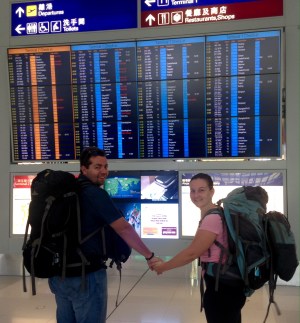
To set the scene for our departure day, Dave rang me at work the afternoon we left asking why I wasn’t at home yet. I’d mistaken the departure time, so it was once again a mad peddle home and straight into a taxi for the airport. There’s a lot to be said for taking a day off before holidays and easing into it, but that doesn’t quite fit the Morton way of life. We nearly received a free business class seat upgrade on the way to Hong Kong, but they realised they’d made a mistake when I showed a little too much happiness and gratitude on receiving the single digit boarding passes.
Needless to say, the first day in the big smoke was spent sleeping. Having visited Hong Kong before, we opted for a walk across Lamma island, in 35 degree heat, to a quaint fishing village for lunch.


We were thankful that in a city of 7.3 million we could continue our day in sweaty backpacking attire without running into anyone. Until, that is, we bumped into Dave’s old work colleague, who took us out for dinner in a trendy part of town.

Two nights in Hong Kong was long enough so we decided to leave early for Bangkok.
On day three of our month long backpacking adventure, we were overwhelmed by Asia’s biggest discount mall. An eight hour, 15,000 step shopping spree left Dave with a new, tailored suit crammed into a backpack for the next 4 weeks.

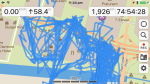
Our recorded footsteps within theshopping centre! (Above)
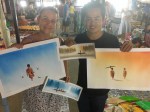

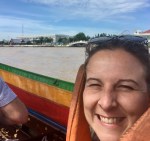
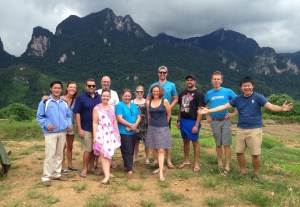
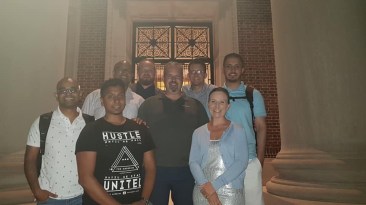
A few days of aimless relaxing was enough before our overland adventure began. Eleven like minded, well travelled adventurers, aged between 25-55, set off from Bangkok together. ‘Instant friends’, who have travelled to 114 countries between us, came from varying backgrounds but are united in a love of travel.

After a boat trip up the Bangkok waterways, we boarded the 13 hour overnight sleeper train to Chiang Mai (Translates to New City). Interestingly, all of us had already done the Vietnamese sleeper trains so felt quite at home in this second class paradise – even with the bright yellow curtains and the lights left on which made the beds glow!

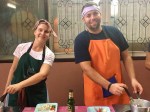
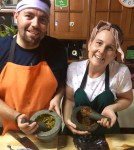
The first activity I voluntarily participated in was a Thai cooking school with a pint sized instructor named ‘little Noodle’ – both statements in this sentence really are true. The adventure started by shopping for ingredients in the local market for the 6 courses. Dave and I did different dishes in the hope that we would have double the amount of dishes ‘we’ could cook when we return home – one word in this sentence is false. Randomly, a fellow student chef gave me instructions for baking cakes in mugs in the microwave – true?


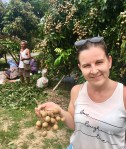
Rolling out of the kitchen and onto the road we began the next activity; a cycling tour around Chiang Mai. The 35km / 35 degree ride included a few unique ‘tourist hotspots’ in the surrounding villages and countryside, specifically, an old leprosy colony, a lychee farm and an outdoor Buddhists Crematorium. The circle of life is always fascinating in these countries but becomes confronting very quickly when looking too closely.
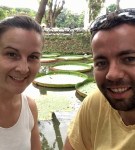

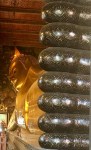
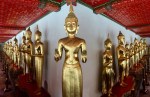
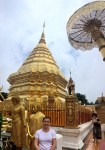
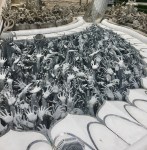
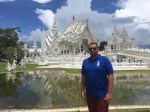
Chiang Mai’s last activity left an impression; a massage parlour offering traditional Thai services as part of a rehabilitation program for current and ex prisoners. No visit to Thailand would be complete without a visit to a temple. Of the 30,000 temples, we can tick off 4, including a temple on a mountain, a silver male only temple, a white temple and a temple that had hundreds of Buddhas in different poses. That’s 8 hours nicely packaged up into a few words…
It’s now Monday morning and we have entered Laos.

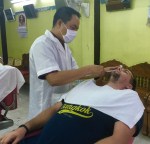
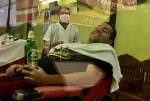
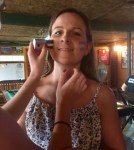
As soon as we crossed the border the tempo changed immediately, and a sense of excitement became apparent – Dave celebrated with a $1 cutthroat shave in the back streets.
Laos; the reason we are all here in Asia, is a communist country with a much simpler way of life. Our mode of transport for 350km was a traditional 30m long boat down the the Mekong river. To give you an idea about the distance we travelled over two days; our starting point was Far East on the Thai border and we travelled west through the Mekong until we were smack bang in the middle of the country.
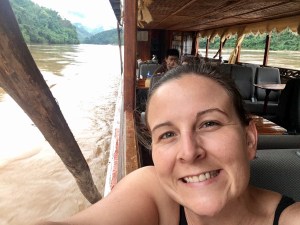
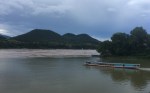
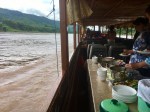
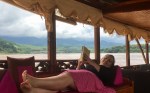
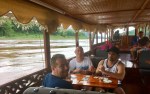
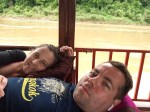
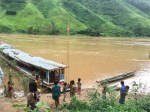
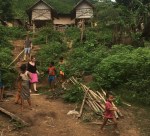
At first glance the brown surging river flows for miles with limited human life. Every now and again a little village of flax huts dotted on the foreshore can be spotted with children playing in the water, or a fisherman with a bamboo rod balancing on a rock or elephants bathing with the locals. Occasionally, the peace of the river is disrupted by a long speeding canoe ‘thing’ zooming by, with the driver wearing a motorcycle helmet for protection. An odd smell lingered and suddenly a VERY dead body unexpectedly floated by. It was likely to be a villager whose hut fell down in a mudslide, quite visibly some time ago. After a few hours, we pulled up to a tiny village of 35 people living in 5 huts.

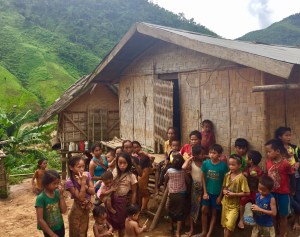
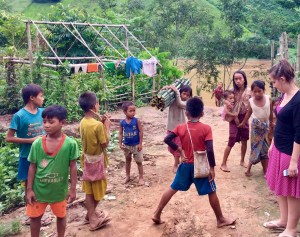
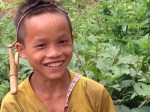
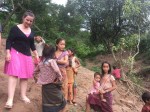
Grubby, smiley, content little people who want nothing more than to be kids played in the mud, greeting us with outstretched arms. Intrepid Travel doesn’t stop very often, to ensure the people aren’t financially reliant on outside donations. (Intrepid also practices responsible tourism by not using plastic bags and eating and staying at locally owned restaurants and hotels). This village is miles away from anywhere and only accessible by water so we were thankful to meet a civilisation not corrupted by city life. Tiny little hands guided us through with laughter and broken Lao and English. At 245m above sea level, it’s a majestic feeling to be floating down the Mekong; clouds weaving through the layers in the forests and touching the foreshore.
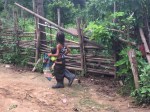

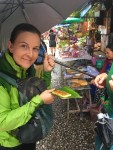
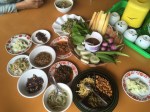
Our midway overnight stop was in a guesthouse where we had local food and visited the produce market. An open mind for ‘cultural diversity’ is required here as some scenes are too horrific to write about, so I’ll just mention that there were imported New Zealand apples, and post you a photo of some random street food.
The following day, the current pushed us along for another 7 hours until we reached Luang Prabang with only a stop at a hillside cave/ temple and 4,000 statues of Buddha from the 15th century. While we’re on the Buddhist topic I’ll mention that at 5am in Luang Prabang we participated in the Giving of Alms.
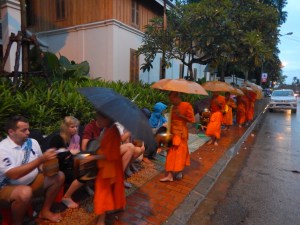
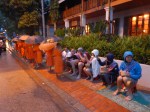
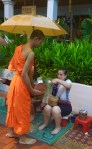
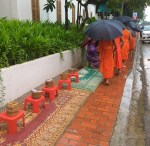
For centuries, Buddhist monks have been receiving all their food from donations to be eaten before midday. Monks join the temple as early as 13 years old but they aren’t forced to stay. Local, poorer villagers send their children for free education, housing and food. Locals donate food as they believe they’re feeding their ancestors through the monks. Really, it’s a win-win situation for all! As the sun was rising, and despite the rain, 5 groups of monks came to receive sticky rice from our little stalls. Lesson for young players: it’s all about portion control, I only fed 4 groups / 40 monks out of 50.
Dubbed as ‘Asia’s most preserved UNESCO town’, Luang Prabang is a beautiful, French colonial town with a variety of activities to engage in, starting with a visit to the bear rescue centre and a swim in the stunning 3 tier waterfall.
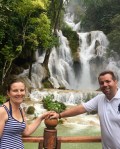
Not only is this town architecturally beautiful and complete with fantastic French bakeries, I was pleasantly surprised to see another city practicing responsible tourism. Tourism here opposes elephant riding but promotes numerous ‘sudo drop in centres’ set up for tourists to teach the local village children English.
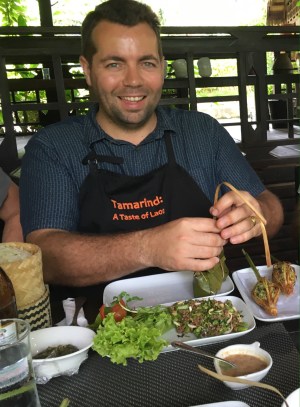
You would have known I was telling you porkies if had I told you that I attended the 7 hour Lao cooking class and produce market expedition with Dave and our tour group. Although he throughly enjoyed it, there was no hiding the fact he spent 7 hours cooking – hell on earth, as you can tell by the photos…
Dave’s day out
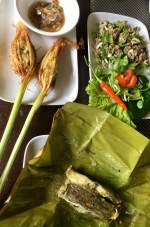
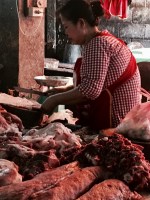

Julia’s day out
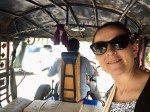

Determined to do something for the community, I nervously ventured out on my own for a day and a half and attended two drop in centres. Billy, a 17 year old from a countryside village spent a few hours teaching me how to complete a Rubik’s cube while practicing his English. @ My Library is set up to provide an environment for creative thinking through playing games. The Big Brother Mouse (BBM) foundation was the second place I visited. Kids come from regional areas in the hope that tourists will visit this centre so they can practice reading, writing and speaking English. To put some context around this, the situation for both child and tourist is to literally walk in and start a conversation. Thirty willing kids were crammed into a brightly coloured room, but sadly only 4 tourists were ready to help. Surprisingly, after two to three years at BBM some kids leave speaking better English than collage graduates, which is a pipe dream for most. In a 2 hour unstructured chat with 5 teenage boys, let me tell you, we covered a lot of ground. The highlights included:
– curiosity as to whether men can marry men in my country and a conversation around men having multiple wives. Had Australia legalised gay marriage, it would have made for a much easier conversation as to why New Zealand was legalised but Australia wasn’t!
– a rendition of Maori history, which I’m so glad no Kiwis were listening to, while I answered their many questions about Maui and the fish hook!
– they were fascinated with how money was sent/ transferred between people. Without bank accounts, Lao people send money via post and have a secret password between recipient and ‘postman’
– a discussion about what they wanted, when they are older. Their answers startled me. Remember that Lao GDP is USD 1,400, and that many haven’t been across the river to a neighbouring village ($1 boat trip). Many dream of one day doing a return trip to Bangkok ($150) but this non essential luxury would take them 10 years to save for. Their clear hope for the future was “happiness”. I asked what would give them that and surprisingly, they wanted the “long term sort” of happiness that a happy, healthy family brings , not the “short term sort” provided by mobile phones and money. Quite impressive for kids who are living on a few dollars a day and walking many hours from their villages to come to lessons. The Big Brother Mouse is more than a place for kids to practice their English with tourists for a few hours a day. This NGO is creating a way to teach children to read, which is not common in this poor nation to the extent that outside Vientiane capital city, BBM still holds the only book publishing licence. They created the first Lao books, designed their own fonts (Lao Language) and designed a system to type that font. BBM has delivered 4,500 ‘book parties’ to remote villages around Laos, taught the teachers to read, and in the few years that it has been running, has increased the Lao economy. For all the bad in in this world, there’s a hell of a lot of good people out there like the American who started Big Brother Mouse.
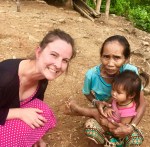
Another wonderful project is the Friends Without A Border hospital information centre which has been set up to train locals how to provide and manage free hospital services for children. (74/1000 children won’t make it past 5 years old because of death from treatable illness) On my visit here I’ve been blown away by the kindness of people. It expands beyond financial generosity.
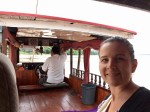
The boat trip to the little village across the river
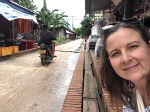
My adventure continued to the village across the river, that my guide said no tourists go to. He was right. I took a private 40m long boat ($3) across to what looked like being dropped off in a remote forest. I stepped into the Mekong before walking through dense bush, through mud, over a driftwood bridge where I arrived at a one lane street and started walking to the village – a village that was so small I passed through without realising. With 3 hours to kill before the boat came and collected me, in a village with no restaurants or places to sit, I opted for a hair wash in a tin shed, complete with sink, kitchen scissors and a rain water bucket. The 9 year old hair dresser was so good, I told her mum. Her mum then invited me into her house for a massage. I lay on her floor while her 6 kids lay on the ground with me. The 6 year old was playing with his truck at my feet, the 5 year old was laying face to face exploring my white-person features while the 8 year old played with my unshaven leg hair! I couldn’t finish this priceless experience until the kids had chosen a fluorescent nail varnish and I had French braided their hair. In total, $7 plus a $7 tip.
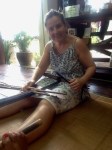
My final adventure was to a local weaving handicraft class. An hour into the 2.5 hour session, I had a numb bottom and sore back so I outsourced my woven black strap to the teacher and ran an English class for the local, trainee shop assistants. Leaving Luang Prabang knowing that a dozen children now have an increased vocabulary was a priceless experience. Some words I included in their vocabulary were left, right, once, twice, the concept of synonyms and antonyms, colours and how to ask for help diagnosing an illness. Overall, I was pleasantly surprised to see a town practicing responsible tourism emphasised by opposing elephant rides but promoting numerous free options for tourists to help kids grow. In the one third of the world we’ve been to, I’ve never been to a nation so willing to learn.
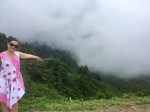
Seven hours and 300km of, up in the clouds, super windy roads later, we arrived in VangVieng.
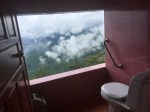
First impressions left us disengaged with the first Lao town converted into a ‘tourism adventure capital’. Determined not to let spirits be dampened, Dave booked our group on our own private outdoor excursion, kicking off with an 8am swim in the Blue Lagoon natural swimming hole then onto the world famous Lao Tubing down the Noumsong river. Previously this activity had the fatal reputation of drunken idiots banging their heads on the rocks after heavy consumption at the river bars – ‘idiot proofing’ has since improved the town’s safety reputation. I genuinely don’t understand why you’d want to be anything but connected to what was a truly memorable, meditative experience. For hours, face up, we floated down and around the winding river, wrapped with forest. Towering above, the sheer mountain cliff faces overshadowed our tiny existence. Saffron-robed Monks discreetly dipped among the river-grass and village children carelessly played in the current, while we stopped only for a riverside BBQ lunch and caving expedition. Deep inside the cavern, the tubes floated while we pulled ourselves along until we banged into the clay-made stairway leading up, and in. With our headlights mounted, we walked further into this gigantic pitch-black cave, that once sheltered hundreds of villagers during the war. At times there were bats, at times we waded through water and at times we were on our hands and knees, crawling through, holding onto the stalactites above and squeezing through cracks between the ‘cave rooms’, until we reached daylight. I’m pleased to report my diamonds remain intact, albeit splattered in mud and their owner loved every moment.
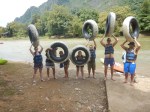
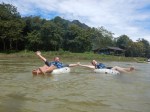
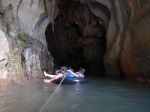
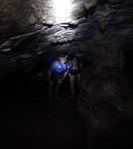
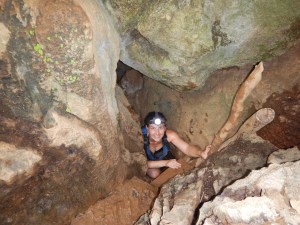
A game of riverside volleyball – below

Ending a truly magnificent day, the All Blacks beat the Wallabies and Dave and I stood proudly amongst random Kiwis painted in our national colours. Sadly, I missed out on the rugby sweepstake, and a massive 100,000kip that could have paid for this sublime day out – 15 priceless dollars.

Intrepid automatically donated part of our tour cost to the COPE foundation (which we visited), set up to combat U.S landmines currently killing the Lao people. Laos remains the most heavily bombed country in the world, per capita, in history. During the Vietnam war, 270 million bombs dropped, equating to 1 every 8 minutes, 24 hours a day for 9 years. 30% or 80 million failed to detonate during the war. A heartbreaking 25% of Lao villages in all provinces are still littered with unexploded bombs, including 41 of the 46 poorest districts. This is a major problem killing 100 Lao people per year. Village kids make up 40% of victims, as they hunt for bombs which can be sold on the illegal scrap-metal market for $20, feeding a family for a month. Yes, that is a lot of ‘statistics’ and ‘numbers’ but it became very real after seeing the emotion in our local guide’s eyes when he was recollecting a story about lost family members. I remember thinking, after visiting the Cambodian Killing Fields, how does our society let this happen? Once again we learnt that the bombing in Laos between 1964-1973 was known as the ‘Secret War’ and was blatantly hidden and lied about for the 9 year duration. Another three died last week, and based on statistics, that will happen every week, week after week, as children try to feed their families and farmers plough their rice fields. This may sound dramatic, but in the West, we just don’t understand. Personally, I remember ignorantly looking at at a map and trying to understand why the tours only went to the same destinations and cities leaving most of the country unexplored.
Why we love travelling, particularly overland, is having the opportunity to meet the people, hear their stories and live through their eyes. Often the countries which give the biggest impact are the ones that leave you feeling torn as to which cause is the most important to give to, or maybe a bit for each is better, I don’t know.
Although we have sacrifices, challenges, hard work and compromise in our lives, I can’t help but think how lucky we are to flit around the world, have our health and good education – paradoxically I also can’t help but think how lucky they are. Laos, one of the world’s poorest nations, some would presume they have the least, but in many ways, they actually have the most. Remove electricity and “short term happiness”, add Buddhism, respect, kindness, time for family, and in turn you get a nation of thankful, happy, kind and welcoming Lao people, who are simply after, “long term happiness”.
Farewell Laos and, kwap jai lie lie to the Lao people.

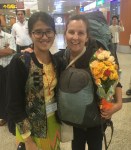
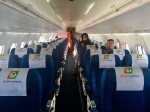
Precisely three days before our international departure from Laos, we decided the next leg of the adventure was to be Myanmar (You can imagine how stressed this control freak was by leaving visas to the last minute). Why Myanmar? We based that decision purely on the fact that a well travelled Intrepid traveller advised us Myanmar was her favourite country and that she has remained in contact with Lae, her freelance tour guide. Our fascination with Myanmar stems from knowing that the traditional culture still remains to the forefront of everyday life. Tourist visas have only become easily accessible since Myanmar’s independence and the fall of the military government 7 years ago. Even now, tourism isn’t as prominent as elsewhere in Asia, particularly in the wet season. This fact was reinforced by the 60 seater prop-aeroplane trip and the first of four stops on our whirlwind 6 night cross-country visit with Lae. Of the SEVEN passengers, Dave and I were the only tourists. The crew to customer ratio, 5:7, reinforced the excellent customer service, to the extent that our luggage in Bagan regional airport was carried off the plane, through the airport and into the taxi by the ground handlers. I suspect this is normal for a regional airline despite the fact I felt like a VIP carrying my bouquet of flowers from Lae.
Bagan is famous for hot air ballooning over this unique landscape. Alternatively, poor people, like us, experience the beauty through $2 bike riding tours. Hundreds of kilometres of lush bush are scattered with mud roads weaving among the 2,000 pagodas and temples. Now picture this, climbing to the top of a pagoda and only seeing a uniform green landscape for miles, no restaurants, no hotels no buildings. The temples are different to any in Asia, reminding me of giant cathedrals with their tall ceilings and 11th century art work and beautiful Buddhist images. Some are only visible by flashlight and each has their own fascinating story. It’s only been 7 years since the democratic revolution, and come the end of 2017, the impacts of an increase in tourism will be felt by locals (and tourists) who will no longer be able to enter or climb these 11th, 12th, 13th century places of worship. Sadly, UNESCO doesn’t recognise Bagan due to the military adding gold ‘umbrellas’ to the historic stupas, therefore, 50% of the original 4,000 pagodas have been destroyed by inadequate restoration. Private donations cover basic costs and volunteers undertake the cleaning – including the temple at the top of Mount Popa perched on the side of a volcano that we climbed 770 steps barefoot to visit.
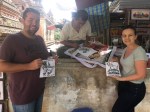
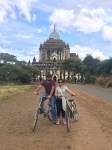
Bagan: bike ridding, temples and boat trip 
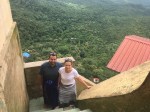
Above: Mt Popa
Below: trek through Kalaw

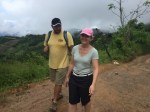
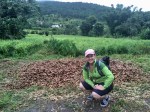
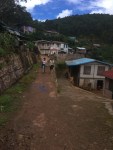
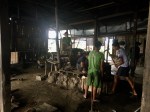
Our two tweaks to the itinerary included a Bagan local boat trip at sunset and a mountain trek to visit the Kalaw hill tribes, 4,200 feet above sea-level. The 6 hour guided trek weaved through thousands of fruit, spice, tea, coffee and vegetable plantations in the mountains. Continuing overland, Inle (Inlay) Lake was our third destination where we spent 8 hours on a 22m long boat visiting Asia’s very own Venice. Inle is a 116km2 lake, housing man made dirt patches predominantly filled with floating vegetable plantations secured by bamboo. Primary aged kids row their canoes full of the neighbours kids to school, while their fathers use their legs to row into the lake to fish with hand nets and mothers sell produce in the floating markets. Winding waterways lead to patches of land with 1,000 ancient stupas while post offices, petrol stations, handicrafts, boat builders and blacksmith shops stand on stilts in the water. Dave watched his new $20 kitchen knife set being handmade by a family of blacksmiths – below
Rounding off our overland tour was the former capital, Yangon, for what should have been a walking tour. Monsoonal downpours, common for this part of the world, meant walking was replaced with driving to the hotspots, including the 65m reclining Buddha and the Shwedagon Pagodas, covered in 60 tonnes of gold. In today’s money, the gold is worth $8b. Remarkably, donations keep the reapplication of gold every 5 years viable. A good investment if the price of gold increases.
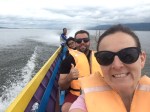
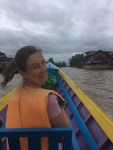

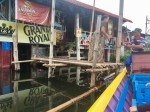
Petrol station (above), post office (below)
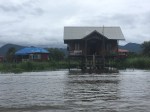

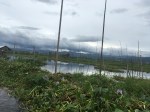
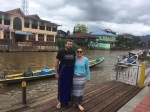
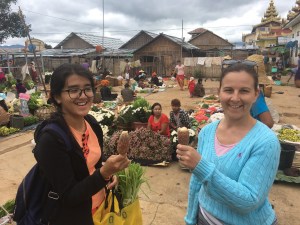
Throughout the 7 states, there are numerous minority tribes, with the majority being Burmese. Each tribe follows their own traditions, with different dialects and clothing; all black attire, orange headpieces and long-necked woman with brass rings distinguishing their ethnicity. Although some villages prevent minority tribes living within their village, what remains uniform is the children’s innocent, playful nature. Stopping in one villages to sing the English alphabet together has the same reaction in the next where we all counted to ten. All kids, in all villages, wave or smile while screaming ‘ingle’ (English white person) or what translates to “the English are coming”. Let me just tell you, it’s pretty adorable when 3 year old twins call out their only known English word.
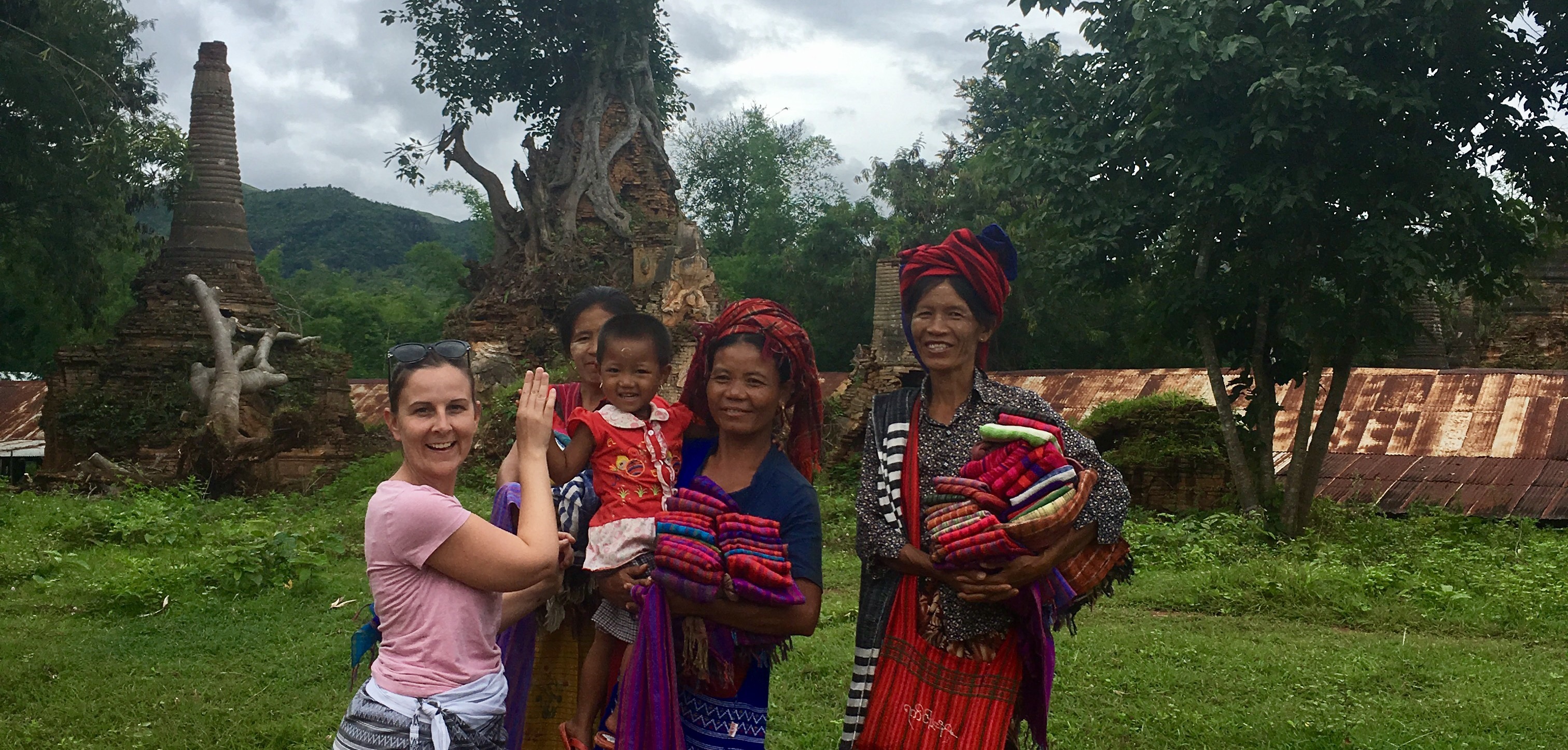
I vaguely remember watching ‘some lady’s’ release from permanent exile on TV many years ago, but unbeknown to me at the time, many years later we would be in a country spending time with the kids of the next generation who will only know a country without fear of prosecution and freedom of speech. (For most of the country) That lady, a Nobel peace prize winner, was Aung San Suu Kyi who helped bring freedom from fear and led the overturn of the Myanmar military government. Albeit an oversimplification, an example of what democracy means for the people is the change in price of a phone SIM card. In 2003 it cost $2,000, in 2005 it was $1,600 and since the democratic revolution a few years ago, the price for communication has been reduced to $1.50. Power often drops out in smaller towns, and little villages are completely without, so mobile devices will open the country up for business and help make money for families.
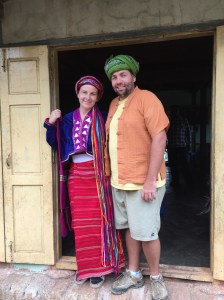
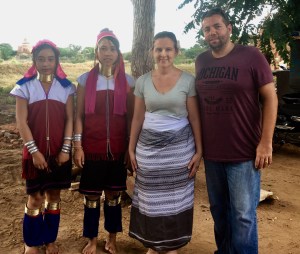
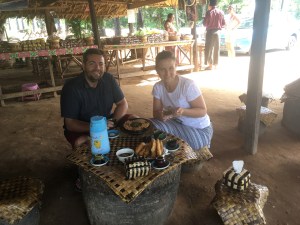
In many ways, Myanmar feels so different to many of the Asian countries. With a language originating from Tibet, food with an Indian influence and a countryside as green as New Zealand. It’s a fascinating country, a nation still following traditions in the everyday way of life. Children and woman all use ground thanika (tree branch) and water as make up and sunscreen, different villages have their different ways of serving food, and the majority of the men and woman wear longyis (similar to a lava lava) everyday. Cows and carts are used as transportation, farming and for daily routines such as grinding the oil from peanuts which continues to remain part of every day life.
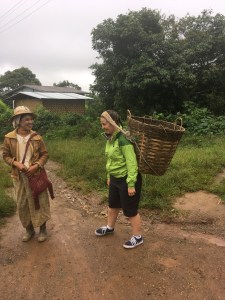
Locals bathe and launder in the rivers. The roads are repaired by men scooping tar from buckets and running along the road pouring it out wearing thongs/jandles/flip flops/double pluggers – whatever you want to call them. That’s not the safest footwear, but the only option for workers getting paid a few dollars a day.
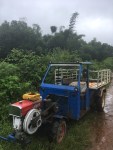
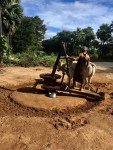
Grounding peanut oil (above) and thanika, traditional make up (below)
Myanmar exceeded expectations and we’re both thankful having now visited a country with so much hope for prosperity. Lae did her country proud. It’s a proud nation, with so much culture, history and such welcoming people. Our pint size private guide, who has a heart of gold and boundless energy ensured we got everything we wanted out of the trip. An outstanding trip considering we (we all know that means Julia) wanted to see 4 destinations in 5.5days, with only one instruction: “local experience”. We now leave with a lifetime of memories and new Myanmar friends. Lae, ‘chay-tzoo-beh’; thank you for opening your heart and sharing your country through your eyes.

Week 4, the final week.
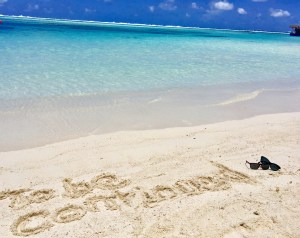
I was a little paranoid about going back to work next week and pretending this had been a relaxing break ie. relaxing in the truest sense. To combat that risk, the only option was to book a trip to the Maldives – pronounced mal-divs (not dive). Maldives, because 5 years ago, when we were planning our honeymoon, I spent a solid week (unsuccessfully) ‘negotiating’ with our very patient travel agent and friend, Danielle, as to how we could incorporate this trip into a non-flexible RTW ticket. So, when I saw heavily discounted international flights from KL/Male/KL/Goldie, I pounced; sadly not realising that the majority of the Maldive islands have mandatory, overpriced seaplane transfers. Twenty hours of researching alternatives and determined to stay within the ‘holiday budget’ balanced against the Maldive experience, we found a boat transfer to one of the Northern Atolls, and stayed in an all-inclusive overwater villa.
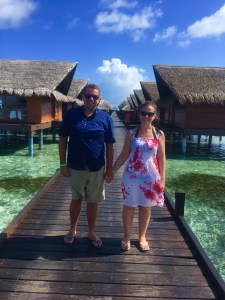
The international airport, on its own island, is fascinating in its own right; hotel and private launches drive right up to the airport’s jetty – their version of an über collection point.
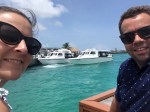
The cheap AirAsia flights arrive/depart at night so we stayed the first night on the main island of Male. In the hope that we could buy snorkelling gear before heading over, we were shocked at island prices of $100+ for a mask and snorkel. We decided to rent them. As we’re nearly out of sunscreen ($45), now I’m slightly wishing I didn’t donate my hat to the hill-tribes in Myanmar!
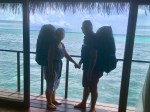
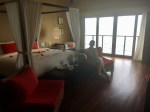
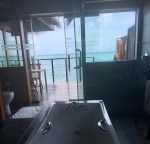
reception (below)
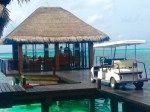
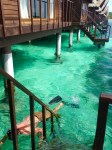
Normally, our accommodation tends to be the cheapest in the city, so going from a two star to a five star was quite the shock. Our head butler, Vivek welcomed us to Adaaran then quickly buggied us away from the other main check-in reception (which I thought was super fancy, with its sandy floors), to the exclusive ocean-villa reception perched overwater at the end of the 500m pier. We hadn’t even arrived at our room and Dave had to shut my jaw, which was left, unknowingly, hanging. You can only imagine the reaction when our butler opened the front door to 180 degrees of ocean, with a staircase from the day bed to the sea. The word “private” is the best way to describe this. Dave surprised me with a prearranged ‘please surprise the wife, welcome’ of champagne, flowers and fruit on arrival and their preferred water-villa with a sunset outlook and far away from the foreshore. Heck, I was just stoked to have a buggy service – it was a little OTT for this wee backpacker!
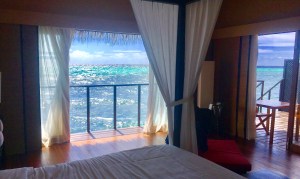
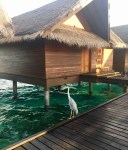

This island has something for everyone; 1km long and discreetly segregated into different demographics and interests. For example, one coastline has an epic wave break for the surfers, and is complete with its own ‘surfers only’ beach chalets, surf racks, beachside cafe and bar, surf office, a medical centre and a daily boat to another reef. The further around the island we walked, there were hidden restaurants and beach bars, garden villas and beach villas and numerous protected white sandy beaches for the ideal snorkelling with the prerequisite plethora of tropical fish.
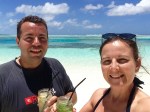
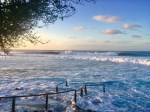
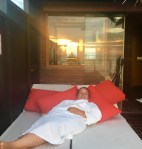
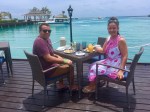
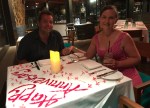
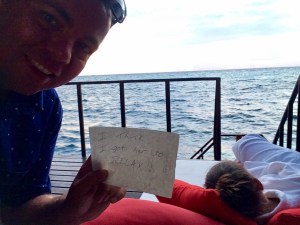
“Relaxing” doesn’t make for good blogging, so I’ll summarise the repetitive ‘day in the life’: Dave, my barista, delivers a coffee in bed, followed by a snorkel from the doorstep. Off to breakfast, beach, another snorkel, then lunch, then pool bar, afternoon on the villa’s day beds until sunset with a snorkel at dusk as it’s the best time to see the eagle rays and non-human-eating 1m reef sharks. The day is then finished off with a cocktail at the villa’s sunset bar then to dinner and buggy back to the room. We found things to celebrate, such as Uni results and our 10 year anniversary (was actually 9 years but 10 made for an excuse to get free cake – which is just what you need on an all inclusive, 20 meals a day vacation!) Dave asked me today if I was actually relaxed or just the ‘tick, done it kind of relaxed’. Let’s just say I have nothing more to write about so it’s time to push publish. I’m well and truly reset and ready to come home. We both are.
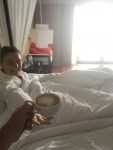
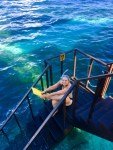

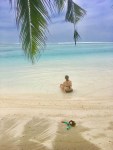
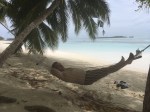

Dave and the meditating bird – above, not below 🙂

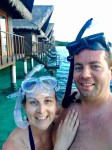
In summary, the Maldives is obviously something pretty special but if you pull apart what made it special, it was because we had 5 days of isolation. Just Dave and I, in our own little part of paradise, completely private from the rest of the world. For that reason, the water villa was a winner. Today is Thursday and tomorrow evening we start the two overnight flights home with a day ‘hop-on-hop-offing’ around Kuala Lumper in between.
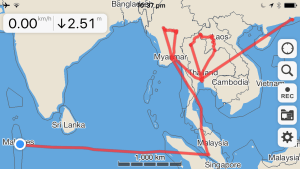
Four weeks, two days and six countries after it began, we’ll be home for Father’s Day family lunch followed by a special dinner with our close friends. What better way to wrap up one heck of an adventure before work on Monday.

At the end of any holiday, the first thing we get asked is “what was the best part” – I hope you can tell from my writing that it was as follows: floating and boating down the Mekong, spending time with the Lao and Myanmar children, cooking together in Chiang Mai and meeting the hundreds of locals who will be forever ingrained in our memories. Had we come straight to the Maldives, I don’t think we would have truly appreciated the exclusivity that this part of paradise represents.

Above all, time together, just hanging out with my best mate.
Words or images can’t really capture “time”.
19.541534
102.632150







 DJ Morton's Adventures, Together